Trolley Wisdom: A Hisarönü Supermarket Shop for Balcony Breakfasts and Beach Picnics
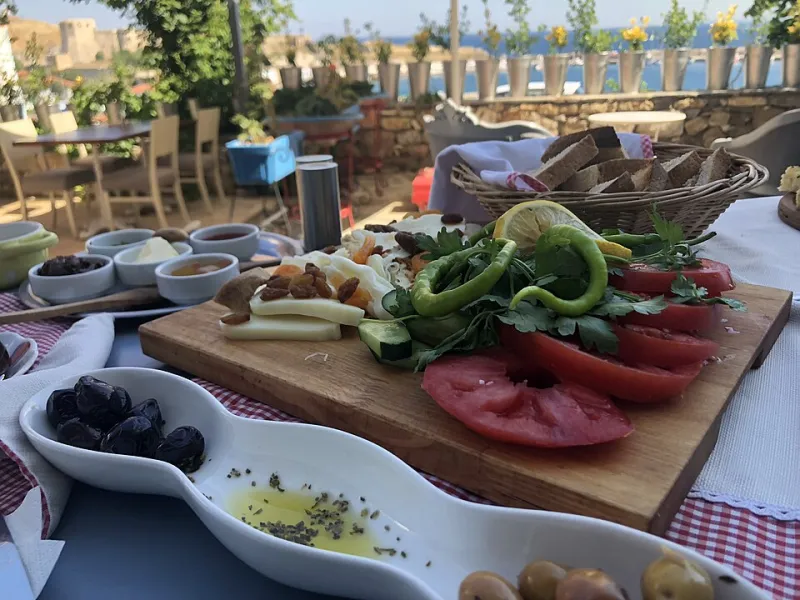
Photo: Glassmug29, CC BY-SA 4.0, via Wikimedia Commons
Self-catering has a reputation problem. Say the word in Hisarönü and people picture a week of dry bread and a fridge full of yellow cheese, while the restaurants on the strip carry on without them. That's a shame, because the supermarket shop is not the opposite of eating out. It's the thing that makes eating out affordable. A few well-chosen items in the apartment fridge mean you can say yes to the harbour dinner without wincing, and still have something decent to eat at 8am before the dolmuş.
Here's how to shop it in 2026 without eating badly or pretending you're in a MasterChef audition.
Know your shops
Hisarönü has a handful of small supermarkets and a couple of larger ones near the main road. Migros is the reliable middle ground: decent labels, predictable stock, a good chilled section. Şok, BİM and A101 are the discount chains — cheaper, faster-moving, and brilliant for basics, but don't expect the same brand every time. Then there's the manav (greengrocer), where tomatoes actually taste of tomato, and the village pazar, which is the best value of the lot if your holiday happens to land on market day.
The rule I'd give any first-timer: use the discounters for water, yoghurt, eggs and cleaning stuff; use Migros or the manav for cheese, olives and produce you actually want to eat; use the pazar for a proper haul.
The breakfast basket
Turkish breakfast is a beautiful thing, and you can assemble a modest version for far less than a hotel buffet.
- Beyaz peynir — the white cheese. Saltier and crumblier than feta, and very good with tomato. Buy a 200g pack, not the giant tub, unless you're feeding a family.
- Kaşar — a yellow, semi-hard cheese that melts properly. Good for toasties and for kids who aren't sure about the white stuff.
- Eggs — bought in tens, usually. Check they're intact; the boxes get stacked.
- Tomatoes and cucumbers — from the manav. A kilo of tomatoes and a few cucumbers will cover several breakfasts.
- Olives — the deli counter or a jar. Black ones are milder; green ones are sharper.
- Simit — the sesame ring. Buy them fresh from a bakery or a street cart, not the sad plastic-wrapped ones in the supermarket. They cost pennies and are best the same morning.
- Bal (honey) and kaymak if you're feeling fancy. Kaymak is a thick clotted cream; a small pot goes a long way.
- Çay — Turkish tea, loose or bags. The bags are fine. You'll need a small glass if the apartment doesn't have one, but most do.
A breakfast basket for two — cheese, eggs, tomatoes, cucumber, olives, bread, honey, tea — lands somewhere around 350–450 TL at 2026 prices, depending on where you shop. That's roughly a tenner for several mornings. Compare that with two full English breakfasts on the strip.
Balcony lunches and picnic days
Lunch is where self-catering earns its keep. You don't need to cook a meal; you need a plate of things.
- Yoghurt — buy the big tubs. Sade means plain. It's thicker than most UK yoghurt and works with fruit, with cucumber and garlic, or straight off a spoon.
- Salça — tomato paste. A small jar plus olive oil turns a boring tomato into something worth eating. If you only buy one 'cooking' item, make it this.
- Zeytinyağı — olive oil. The supermarket stuff is fine for salads; don't overthink it.
- Tulum peyniri — a crumbly, salty cheese from the east. Stronger than beyaz peynir and excellent in a picnic with bread and tomato.
- Ayran — the salty yoghurt drink. Buy a carton, not the tiny bottles, and drink it cold. It's an acquired taste for some Brits; my advice is to acquire it.
- Fresh fruit — peaches, figs, melons, whatever's in season. The manav will let you taste before you buy, most of the time.
For a beach day, pack simit, beyaz peynir, tomatoes, olives, a bag of dried figs and a big bottle of water. That's a picnic for two for less than the price of one strip-side burger.
What to leave on the shelf
- Imported breakfast cereal — expensive, dusty, and a waste of suitcase-adjacent calories.
- 'English' bacon — it exists in some shops, it costs a fortune, and it doesn't taste like the bacon at home. Have a proper Turkish breakfast instead.
- Pre-made salads — sad, wet, and twice the price of making your own.
- Hotel minibar water — buy a 5-litre bottle from the supermarket for a fraction of the price. Same water.
- Giant tubs of ice cream — unless you have a freezer with actual space. Buy dondurma from a shop when you want it.
Labels that confuse first-timers
- Tam yağlı — full fat. Yarım yağlı — semi-skimmed. Yağsız — fat-free.
- Sade — plain. Meyveli — fruit-flavoured.
- Tuzlu — salted. Az tuzlu — lightly salted. Tuzsuz — unsalted.
- Doğal — natural. Katkısız — no additives. These are marketing words as much as anything, but they're a decent guide.
- Son kullanma tarihi — expiry date. Check it on dairy; the discounters rotate fast but not always perfectly.
A rough 2026 price check
Prices move, so treat these as a sketch rather than a quote. At the time of writing, a 5-litre bottle of water is around 30–40 TL, a 200g pack of beyaz peynir 80–120 TL, a kilo of tomatoes 40–60 TL, ten eggs 70–90 TL, a kilo of yoghurt 60–80 TL, and a simit 10–15 TL. The total for a basic breakfast and lunch basket for two usually comes in under 600 TL — about £12–15 depending on the exchange rate. That's not nothing, but it's less than one round of cocktails on the strip.
The point of the basket
Nobody goes to Hisarönü to become a supermarket enthusiast. The point is to remove the small, annoying costs that make you hesitate over the nice things. Buy the cheese, the tomatoes, the simit and the big water. Make breakfast on the balcony. Then go and spend your money on a harbour dinner, a boat trip, or an extra coffee because the sun's out and you can't quite face going home yet. That's not self-catering as penance. That's just good holiday economics.