Small Words, Open Doors: A Ten-Word Turkish Toolkit for Hisarönü
Most holiday phrasebooks open with merhaba and teşekkürler, which is a bit like packing an umbrella and calling it weather protection. Both words are fine. They are also the ones every waiter, shopkeeper and dolmuş driver on the Turkish coast has heard a thousand times. The words that actually change your day in Hisarönü are smaller, stranger and far more useful. Learn these ten and you will order better tea, find the right minibus and avoid the classic British blunder of treating a market stall like a car-boot sale.
Start with the morning, not the menu
Günaydın — good morning. Pronounced goon-eye-DUHN. Use it before noon, especially when you walk into a café or greet the person sweeping the pavement outside your hotel. The common mistake is sticking with merhaba at 8am because it is the only word you are confident about. A cheerful günaydın lands better, and it signals that you are not just another holidaymaker waiting silently for a full English.
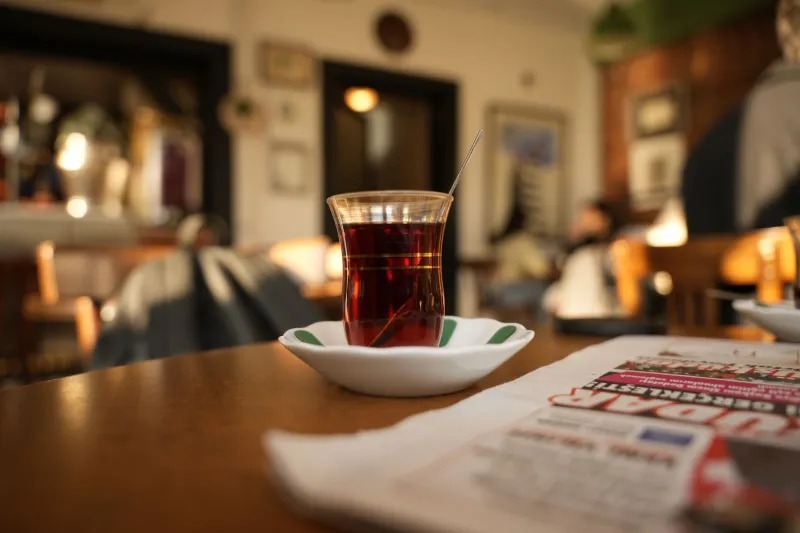
Çay — tea. Pronounced chai, not kay. This is the word that separates a smooth breakfast from a confusing one. Say çay lütfen and you will get tea in a tulip-shaped glass, usually with sugar cubes on the saucer. If you want it without sugar, learn şekersiz — pronounced SHEH-ker-seez. Şekersiz çay lütfen is one of the most useful sentences on the coast. The mistake Brits make is saying şeker (sugar) when they mean without, or assuming tea arrives unsweetened. It often does not.
If you are fussy about strength, açık means light and koyu means strong, but you can survive happily with the first three words alone. The waiter does not need another teşekkürler. He needs to know whether you want sugar.
On the dolmuş and at the beach
Durak — stop. Pronounced doo-RAHK. In Hisarönü, the dolmuş routes can feel pleasantly informal until you are standing on the wrong stretch of road wondering why every minibus sails past. Durak nerede? means where is the stop? It is worth having ready. The mistake is assuming every minibus stops wherever you happen to be standing. Ask first, then wait where the locals wait.
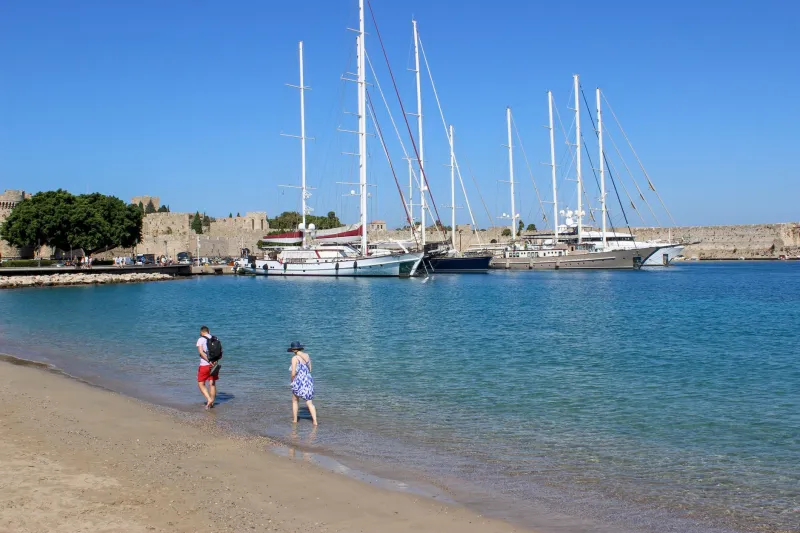
Boş — empty, vacant or free. Pronounced bosh. At a beach club or café, boş mu? is a handy way to ask whether a sunbed or table is free. The mistake is assuming boş means free of charge. It means unoccupied. If you want to know whether something costs nothing, the word is ücretsiz, which is a different conversation entirely. This distinction has saved many Brits from an awkward moment at the sunbed bloke's clipboard.
Nerede? — where? Pronounced neh-REH-deh. Combine it with the word you need: tuvalet nerede? for the loo, durak nerede? for the bus stop, plaj nerede? for the beach. The mistake is pronouncing every letter with great effort and adding an English 'is' in the middle. Turkish is compact. Let the word do the work.
At the market stall
Ne kadar? — how much? Pronounced neh kah-DAR. This is the market word. Use it at the Tuesday market in Hisarönü or anywhere in Fethiye where the prices are not stuck to the produce. It is polite, direct and universally understood. The mistake is launching into a full haggling performance before you have even asked the price. Start with ne kadar?, listen to the answer, then decide whether you are in the mood for banter.
İndirim — discount. Pronounced een-dee-REEM. İndirim var mı? means is there a discount? Said with a smile, it is normal market chatter. Said like a demand, it is just awkward. The classic British mistake is over-haggling for a small item — a towel, a bag of apricots, a pair of sunglasses — as though you are negotiating a used car. A little charm goes further than a dramatic walk-away. On the Turkish coast, market banter is a social ritual, not a blood sport.
The words that make you a better guest
Hesap — bill. Pronounced hess-AHP. Hesap lütfen is what you say when you are ready to pay. The mistake is waiting patiently for the bill to arrive on its own. In many Turkish cafés and restaurants, nobody rushes you. That is a pleasure until you have a dolmuş to catch. Catch someone's eye, smile, and say hesap lütfen. You will not offend anyone.
Kolay gelsin — may it come easy. Pronounced ko-LIE gel-SEEN. This is said to someone who is working: a shopkeeper sweeping, a waiter setting tables, a builder carrying something heavy. It is a small kindness with no real English equivalent. The mistake is saying it to someone who is sunbathing or relaxing. Kolay gelsin is for work, not for lounging. The usual reply is sağ ol — thanks — or simply a smile.
Ten words, one better holiday
You do not need fluency to get more out of Hisarönü. You need a handful of words used at the right moment, with a bit of nerve and a smile. A mispronounced çay will be forgiven. A polite attempt at günaydın will be appreciated. And asking boş mu? before claiming a sunbed might just save you from a red face before you have even ordered your first glass of tea.